Anthropic Announces Free Claude Opus 4.6 for Nonprofits
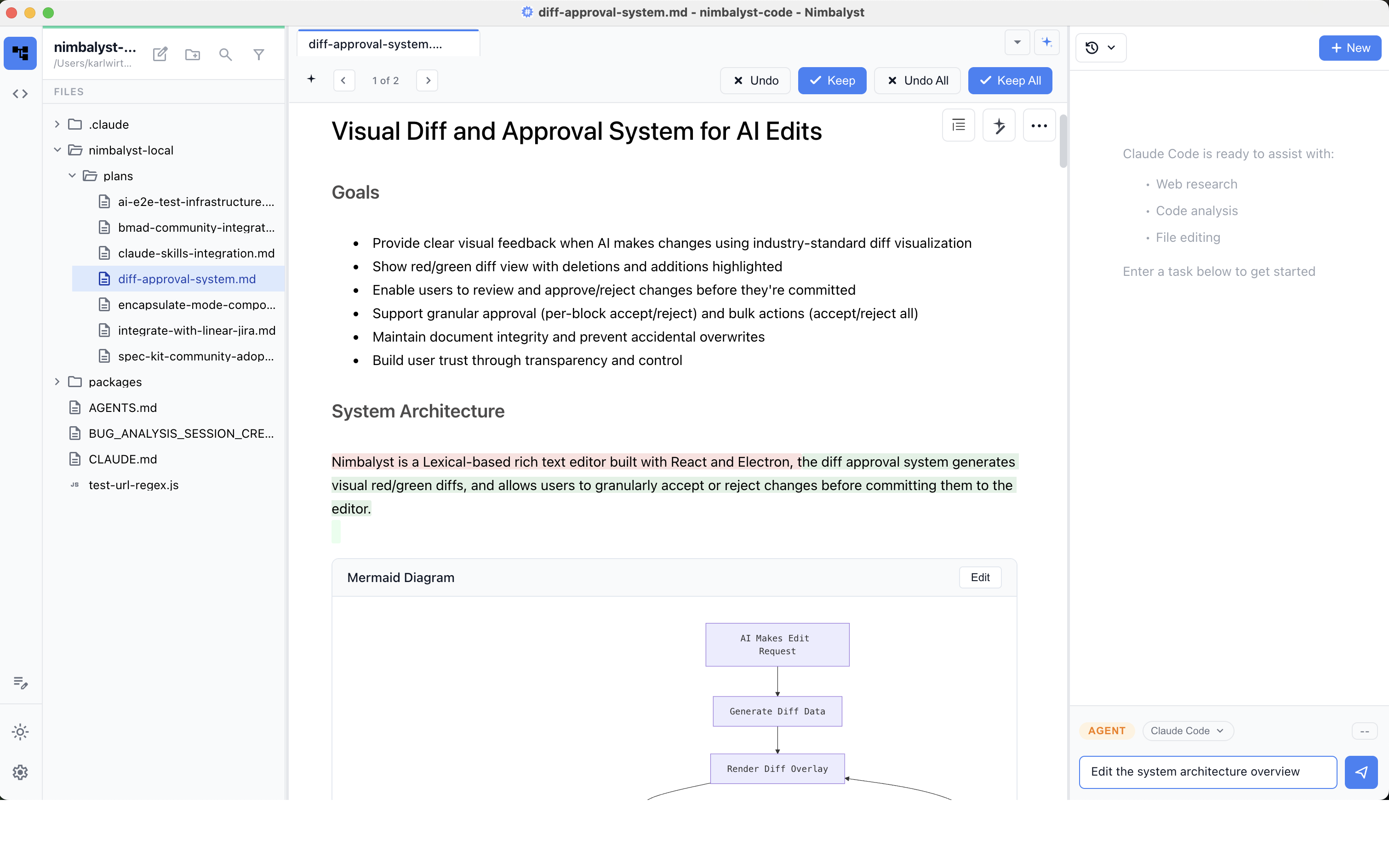
Nimbalyst - The missing interface for Claude Code PMs
|
WHAT
IT SOLVES
Stop
jumping from CLI to Obsidian to Figma Make to IDE
|
|
WHO
IT'S FOR
PMs
using Claude Code for docs, mockups, excalidraw, diagrams, prototypes
|
|
THE
DIFFERENCE
Visually edit and collaborate with Claude Code with your full context
|
|
THE
COST
Free
|
Today's top 24 insights for PM Builders, ranked by relevance from X, LinkedIn, YouTube, and Blogs.
Anthropic Announces Free Claude Opus 4.6 for Nonprofits
#1 𝕏
Anthropic now offers nonprofits on Team and Enterprise plans free access to Claude Opus 4.6, its most capable AI model, to help them tackle complex social challenges.
#2 in
Udi Menkes highlights Guillermo Rauch’s data that Claude-powered Vercel teams drove 12.8% of last week’s deployments—shipping 7.6× more often with 14% week-over-week growth.
#3 𝕏
LlamaIndex 🦙 launched LobsterX, a self-hostable, safety-first AI assistant for document workflows that leverages Agent Workflows and LlamaCloud for parsing, extraction, and classification, secured by AgentFS to protect your filesystem.
#4 𝕏
Philipp Schmid shows how to fine-tune the 270M-parameter FunctionGemma model for mobile action tasks using the Tunix library on Google TPUs. He’s published a step-by-step Colab notebook for easy one-click setup and training.
#5 ▶️
DIY dev tools: How this engineer created “Flowy” to visualize his plans and accelerate coding
How I AI Podcast
CJ Hess uses his custom tool Flowy with Claude Code skills to transform JSON definitions into interactive flowcharts and intermediate-fidelity UI mockups that guide AI-assisted feature planning and coding.
- Flowy parses JSON files in a “flowy” folder—defining nodes, edges, style properties and icons—to render browser-based flowcharts and UI mockups, with an integrated editor that saves edits back to JSON.
- CJ Hess created three Flowy Claude Code skills in Markdown (overview, flowchart, UI mockup) and iteratively refined them by prompting Claude to fix layout spacing, pastel note text contrast, and add a semantic color system.
- He launches 3–5 parallel Claude Code “explore” sub-agents to gather context, generates a spinner wheel flowchart in Flowy (animation timing adjusted from 3 000 ms to 4 000 ms), then commands Claude Code to build the feature (passing TypeScript checks) and uses Codeex (alias “Carl”) on the git diff to catch a pointer-dot misalignment and suggest refactoring into components and constants.
#6 ▶️
How to Make Claude Code Better Every Time You Use It (Full System) | Kieran Klaassen
Peter Yang
Kieran Klaassen demonstrates his Compound Engineering plugin for Claude Code CLI, using slash commands like workflows plan, workflows work, assess, and triage to run a planning–coding–assessing–codifying loop that captures insights in a local docs directory and iteratively improves generated code.
- The compound-engineering-plugin appends codified learnings as Markdown under
/docs/architecture-decisions/and/docs/solutions/, and updates the rootclaude.mdso those rules are injected into every newworkflows planprompt. - With Opus 4.5 and Playwright, Claude Code auto-generates end-to-end browser tests—logging into Gmail to exercise email signature and draft flows, clicking UI elements, inspecting console logs, and screen-recording a video artifact attached to the pull request.
- By defining
alias CC="claude code --dangerously-skip-permissions", all interactive permission prompts are suppressed, enabling fully unattended AI-driven sessions for commands like plan, work, assess, and PR creation.
#7 📝 PromptLayer Blog
How Do Teams Identify Failure Cases in Production LLM Systems - Describes how production LLM failures are often non-deterministic and context-dependent, making them harder to detect than traditional software faults.
#8 📝 PromptLayer Blog
How Large Organizations and Enterprises Standardize LLM Benchmarks - Examines the challenge enterprises face in evaluating LLMs consistently and meaningfully as they move models into production, and outlines considerations for standardization.
#9 📝 Anthropic Engineering
Quantifying infrastructure noise in agentic coding evals - Investigates how infrastructure configuration affects agentic coding benchmark results, showing that environment differences can change leaderboard outcomes by several percentage points. Highlights the importance of controlling for infra noise in evaluations.
#10 📝 Simon Willison
Structured Context Engineering for File-Native Agentic Systems - New paper by Damon McMillan evaluates context engineering for structured data across many models, formats and schema sizes, finding model choice the dominant factor; frontier models outperform leading open-source models and certain compact formats (TOON) incurred a large "grep tax" in token usage. Filesystem-based context retrieval helped frontier models more than open models.
#11 𝕏
Guillermo Rauch reports that GPT 5.3 Codex (xhigh) nails 90% on Next.js evals out of the box, “frame-mogging” the competition.
#12 📝 Simon Willison
AI Doesn’t Reduce Work—It Intensifies It - A Harvard Business Review report (April–December 2025 study) finds AI increases the intensity of work: workers juggle more parallel threads, constantly check AI outputs, and experience cognitive load and burnout. The piece recommends organizations build structured "AI practices" to manage use and avoid unsustainable intensity.
#13 📝 Armin Ronacher
A Language For Agents - An exploration of what programming languages autonomous agents would prefer to program in, focusing on language features and design considerations for agent-oriented development.
#14 𝕏
Google Research zero-shot applied its BirdNET model (trained on 2M+ bird audio clips) to marine hydrophone recordings, surfacing 50+ new fish calls and revealing seasonal chorus hotspots across coral reef ecosystems.
#15 𝕏
Guillermo Rauch plans to roll out an advanced virtualized filesystem decoupled from compute with optimistic affinity, following recent optimizations. This setup will speed up builds and sandboxes on massive monorepos.
#16 𝕏
Sebastian Raschka confirms Arcee AI’s Trinity Large is listed as entry #20 in his “Big LLM Architecture Comparison” article, where he provides detailed architecture breakdowns and comparative performance insights.
#17 𝕏
Santiago says agentic coding has evolved to handle UI building, email/notification workflows, authentication, user management, and performance analytics—features Mocha offers natively.
#18 in
Greg Isenberg delivers a 49-second crash course on Claude Code, demonstrating how to rapidly transform your ideas into working prototypes using the AI-powered coding assistant.
#19 ▶️
How My AI AGENT Is Crushing Everyone Else (Claude Code)
All About AI
Chris demonstrates how to generate and post a 30-second AI agent video on X by running a Claude Code agent on a Mac Mini using the Cling video v3 pro image-to-video model, Nano Banana image skills, and an EJ Live Skill MD workflow.
- Deployed a dedicated Claude Code agent on a Mac Mini for one week using an EJ Live Skill MD file that integrates the Cling video v3 pro image-to-video model.
- Pulled the trending topic “opus 46 fast mode launch vs codeex 5.3 showdown” from hot_topics.mmd (updated three times daily) and structured a 30-second clip in three parts of 10s, 10s, and 12s with a scripted voiceover.
- Generated three reference images from a “selfies” folder via Nano Banana, iterated to fix a mug artifact, applied a Reotion skill to smooth transitions, remove silence, and add centered captions, then posted the final 32-second video to X using the agent’s X skill.
#20 ▶️
Getting paid to vibe code: Inside the new AI-era job | Lazar Jovanovic (Professional Vibe Coder)
Lennys Podcast
Lazar Jovanovic uses Lovable.app, ChatGPT, Cloud Code and OpenAI Codex to build Lovable’s Shopify integration (including user-remix templates and a public merch store) and internal feature-adoption tools by running five parallel prototype prompts and steering AI through markdown PRDs and agent rules.
- He launches five parallel prototype builds for each project—voice “brain dump,” refined typed prompt, design mock from Mobbin or Dribbble, code-snippet template upload, and a custom template—before selecting one to refine.
- He allocates approximately 80% of his time to AI planning in ChatGPT/Lovable’s chat mode and only 20% to executing code generation.
- His four-step “4x4” debugging framework uses Lovable’s “Try to fix” button, inserts console.log statements, diagnoses with OpenAI Codex or Claude via GitHub export, and reverts to an earlier version to improve AI prompts.
#21 ▶️
AI marketing Masterclass: From beginner to expert in 60 minutes
Greg Isenberg
Using Claude Code in Visual Studio Code (via Cursor), James Dickerson builds a complete AI-driven marketing funnel live in under 60 minutes—recording a two-hour vibe coding session transcribed with Whisper Flow, leveraging Perplexity MCP research, Playwright MCP screenshots, 17 custom Claude Code skills and Remotion’s free CLI—on a $200/month Cloud Code subscription.
- Defined and invoked 17 custom Claude Code skills—including "positioning angles", "direct response copy", "lead magnet" and "orchestrator"—trained on Eugene Schwartz and Claude Hopkins, then ran Perplexity MCP research for one hour to identify the "Boring Money" niche angle for $2 million–$10 million service businesses.
- Executed Playwright MCP commands in Cloud Code to capture screenshots from four major agency websites and invoked Anthropic’s "front-end design" skill to output a conversion-optimized Markdown landing page with headline, hero section, lead magnet modal and "Book a call" button.
- Cloned Remotion’s open-source GitHub repo, installed its CLI in Cloud Code and generated square, vertical and landscape video ad variations—with custom Nanobanana Pro book cover graphics and brand fonts—in a single prompt at zero cost.
#22 𝕏
Santiago says AI agents now automate everything from UI building and email notifications to authentication, user management, and analytics—showing 2026 is off to a strong automation-driven start.
#23 𝕏
Google Research leveraged Google DeepMind’s Perch 2.0 bioacoustics foundation model to transfer-learn from bird vocalizations and accurately classify complex whale calls, accelerating marine insights.
#24 𝕏
Philipp Schmid released a free Colab notebook that uses the free-tier TPU v5e-1 to fine-tune FunctionGemma with the lightweight JAX library Tunix and LoRA adapters, then exports the model to safetensors for edge deployment.