Deep research in ChatGPT is now powered by GPT-5.2
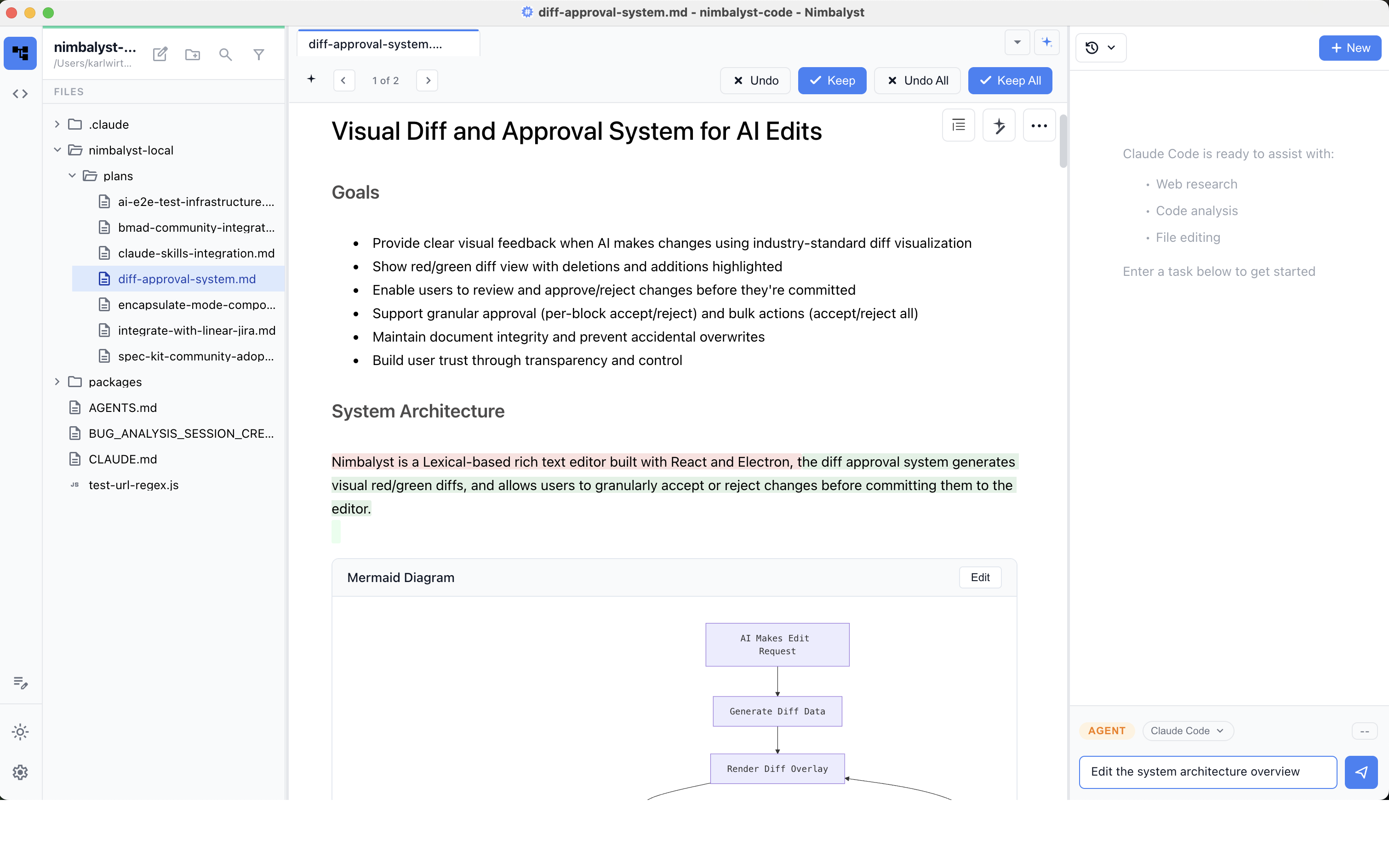
Nimbalyst - The missing interface for Claude Code PMs
|
WHAT
IT SOLVES
Stop
jumping from CLI to Obsidian to Figma Make to IDE
|
|
WHO
IT'S FOR
PMs
using Claude Code for docs, mockups, excalidraw, diagrams, prototypes
|
|
THE
DIFFERENCE
Visually edit and collaborate with Claude Code with your full context
|
|
THE
COST
Free
|
Today's top 25 insights for PM Builders, ranked by relevance from X, LinkedIn, and YouTube.
Deep research in ChatGPT is now powered by GPT-5.2
#1 𝕏
OpenAI powers ChatGPT’s deep research with GPT-5.2. The rollout starts today, bringing improved performance and new enhancements.
#2 𝕏
Qwen launched Qwen-Image-2.0, a next-gen image generation model featuring native 2K resolution, professional typography via 1K-token prompts, flawless text rendering, unified generation/editing, and a lighter, faster architecture.
#3 𝕏
Google Research launched DialogLab, a dialogue design platform that replaces rigid scripts with spontaneous, adaptable group dynamics.
#4 𝕏
Claude launched Cowork on Windows, delivering full MacOS feature parity with file access, multi-step task execution, plugins, and MCP connectors.
Also covered by: @Boris Cherny
#5 𝕏
Harrison Chase compares two architectures for AI agent workspaces—embedding agents inside sandboxes versus treating sandboxes as external tools—and outlines the pros and cons of each approach.
#6 in
e Carl Vellotti and Aman Khan reveal their complete Claude Code space setup for PMs. They include all configuration files and exact prompts so you can replicate the workspace instantly.
#7 𝕏
claire vo 🖤 built an anti-doc-rot workflow with a feature/architecture-organized /docs folder, deploy hooks that sync inline comments and docs, and a changelog.md for all PRs.
#8 ▶️
Learn The AI Agent Cron Job Inception Strategy (Claude Code)
All About AI
The video demonstrates an AI Agent Cron Job Inception Strategy using Claude Code on a Mac Mini, where cron jobs in chron jobs.json can spawn one-time chrome jobs via rules defined in a claw MD file to autonomously discover and schedule new tasks.
- Explore-and-spawn rules in the claw MD file allow any chrome job to spawn a one-time chrome job with constraints: self-deletion after execution, a minimum 15-minute delay before execution, a maximum of two spawn jobs per session, and a mandatory spawn evaluation at the end of each job.
- Claude Code on the Mac Mini initially loads 24 scheduled tasks from chron jobs.json and logs execution via a background script, then uses spawn evaluations to append new cron jobs autonomously.
- In a test run, the agent read the Hacker News front page, spawned a chrome job scheduled at 15:57 to analyze the GitHub repo “total recall gated memory for cloud code” and post a comment on its Hacker News discussion, then chain-spawned a follow-up chrome job at 16:25 to reply on X to user “Dave Goldbot.”
#9 𝕏
Philipp Schmid unveiled WebMCP, a W3C-backed extension now in Chrome 146 behind a flag that brings MCP servers to the browser by letting developers register site functions (e.g. “add-to-cart”) as structured tools via the new navigator.modelContext API in plain JS/HTML.
#10 in
Cole Hoffer shipped messaging agents on Reforge Build—AI bots that open real browsers, adopt distinct user personas, and run parallel end-to-end flows to deliver deep, product-level feedback on messaging clarity, value-prop gaps, and conversion drivers in minutes across any p...
#11 𝕏
Santiago urges PM Builders to run Gen Digital’s new OpenClaw Skill Scanner—the first tool in its Agent Trust Hub—on every OpenClaw skill before installing it. It acts like a “nutrition label,” revealing exactly which files, data, and APIs each skill can access.
#12 𝕏
Santiago showcases Orchids.app, an AI-powered app builder rivaling Lovable and Cursor that supports any stack, BYO API keys, native Supabase & Stripe integrations, and pay-only-for-model-cost pricing.
#13 𝕏
Peter Yang built a workflow on his @openclaw bot using a Twilio phone number, OpenAI real-time API, and Elevenlab voice, but is experiencing 5–10 s response latency and is hunting for faster solutions.
#14 𝕏
Peter Yang outlines five AI usage levels—everyday answers, daily work, prototyping, building apps, and personal agents—and tomorrow is releasing a tutorial with practical steps to master each stage in just one week.
#15 𝕏
Marily Nika unpacks “AI Product Sense,” the judgment you need to ship AI features that survive real-world inputs by weekly rituals: mapping failure modes, defining minimum viable quality, and designing guardrails.
#16 𝕏
Boris Cherny clarifies that Cowork isn’t Claude Code but a separate tool built for non-coding collaboration rather than programming tasks.
#17 𝕏
OpenAI ad lead Asad Awan joins Andrew Mayne to outline the ad principles behind ChatGPT’s Free and Go tiers and how these ads are designed to expand AI access for all users.
#18 𝕏
Sebastian Raschka clarifies this excerpt comes from section 6 (“AI for coding, writing, and research”) of his State of LLMs 2025 article, inviting readers to check the linked piece for the full analysis.
#19 𝕏
DeepLearning.AI Andrew Ng argues AI is boosting demand for tool-savvy workers rather than causing mass layoffs. Plus, OpenClaw agents go viral on GitHub, Kimi K2.
#20 in
Ben Erez highlights a Supra Insider episode where Alexander Danilowicz explains why Magic Patterns has stayed frontend-only, refusing to build backend agents.
#21 𝕏
NVIDIA AI breaks down how its creative team used Weavy AI, Blender, Google DeepMind, DeemosTech, and OpenAI to produce a 12K, 20-robot on-stage scene for its CES 2026 keynote.
#22 𝕏
Aravind Srinivas fixed Perplexity’s search over past threads, now offering fast, reliable history lookups.
#23 𝕏
claire vo 🖤 insists you can’t be deemed a 10X engineer until you’ve built your own mini-Figma/flowchart tool that hooks into Claude Code—just like @seejayhess showcases in the full episode.
#24 𝕏
Logan Kilpatrick notes the knowledge cutoff is currently stuck at January 2025 but will be updated in future models, apologizing for the inconvenience.
#25 𝕏
Philipp Schmid unveiled WebMCP, a human-in-the-loop framework that lets browser agents discover, describe, and invoke a site’s existing frontend tools via natural-language descriptions.