XAI Releases Grok Imagine Image Models
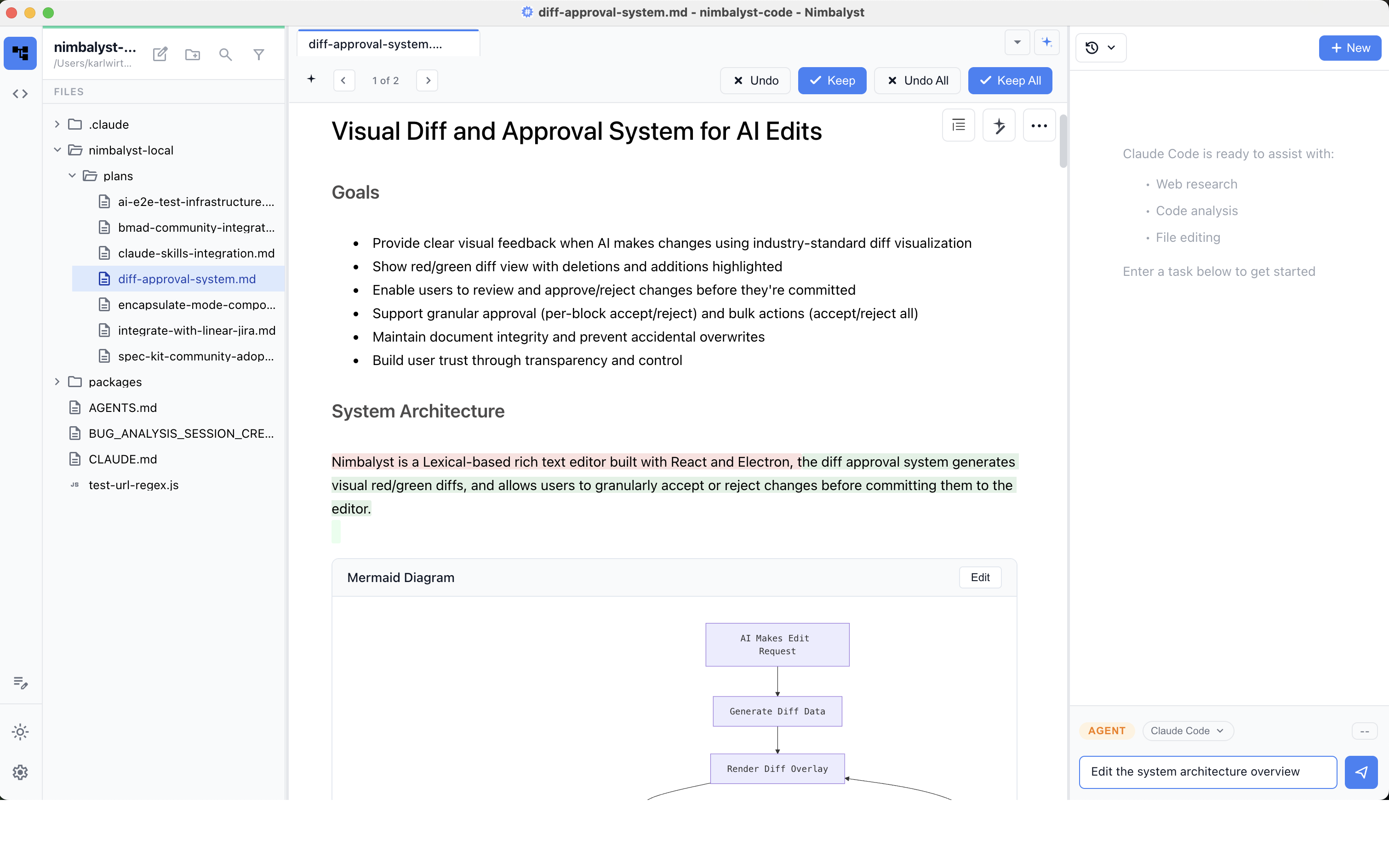
Nimbalyst - The missing interface for Claude Code PMs
|
WHAT
IT SOLVES
Stop
jumping from CLI to Obsidian to Figma Make to IDE
|
|
WHO
IT'S FOR
PMs
using Claude Code for docs, mockups, excalidraw, diagrams, prototypes
|
|
THE
DIFFERENCE
Visually edit and collaborate with Claude Code with your full context
|
|
THE
COST
Free
|
Today's top 20 insights for PM Builders, ranked by relevance from X, Blogs, YouTube, and LinkedIn.
XAI Releases Grok Imagine Image Models
#1 𝕏
xAI launched new image generation models on its Grok Imagine API, now available for developers to integrate via the official docs.
#2 𝕏
Aravind Srinivas says admins can now enable Memory for enterprise accounts, unlocking persistent AI context across all interactions.
#3 📝 Anthropic Engineering
Quantifying infrastructure noise in agentic coding evals - Anthropic shows that infrastructure configuration can significantly change agentic coding benchmark results, sometimes by more than the differences between top models. The article highlights the importance of controlling infrastructure factors when evaluating agentic systems.
#4 ▶️
How to Make Claude Code Better Every Time You Use It (Full System) | Kieran Klaassen
Peter Yang
Kieran Klaassen demonstrates his Compound Engineering plugin for Claude Code CLI, using slash commands like workflows plan, workflows work, assess, and triage to run a planning–coding–assessing–codifying loop that captures insights in a local docs directory and iteratively improves generated code.
- The compound-engineering-plugin appends codified learnings as Markdown under
/docs/architecture-decisions/and/docs/solutions/, and updates the rootclaude.mdso those rules are injected into every newworkflows planprompt. - With Opus 4.5 and Playwright, Claude Code auto-generates end-to-end browser tests—logging into Gmail to exercise email signature and draft flows, clicking UI elements, inspecting console logs, and screen-recording a video artifact attached to the pull request.
- By defining
alias CC="claude code --dangerously-skip-permissions", all interactive permission prompts are suppressed, enabling fully unattended AI-driven sessions for commands like plan, work, assess, and PR creation.
#5 𝕏
Mike Krieger has been building with Labs’ fast Opus—Claude Opus 4.6 running 2.5× faster—and calls it a “crazy unlock.” He’s now excited to roll it out beyond Anthropic.
Also covered by: @Guillermo Rauch
#6 𝕏
Philipp Schmid launched Context-Bench to evaluate LLM context-window management on Filesystem workflows (chained file ops, entity tracing, multi-step retrieval) and Skills discovery/loading. The @Letta_AI leaderboard showcases the top-performing models.
#7 𝕏
Santiago launched the tinyfish-cookbook GitHub repo, a collection of Tiny Fish Recipes, Demos, and Automation scripts. Star it and explore at https://github.com/tinyfish-io/tinyfish-cookbook.
#8 ▶️
Reverse engineer Claude Code Agent Teams
AI Jason
Demonstrates how to install and use the Cloud Code agent teams feature (v2.1.34) by enabling the experimental flag in settings.json and launching collaborative AI agent sessions with “cloud-teammate --mode.”
- Requires Cloud Code version 2.1.34 and adding "cloud_code_experimental_agent_teams": 1 to your global settings.json file.
- Use T-Max (or iTerm2 on Mac with Python API enabled) and run "cloud-teammate --mode" to open split-view sessions for each agent teammate.
- Introduces a "team_create" tool that generates a config file in doc/teams (with an empty team member array) and a "task_create" tool that writes JSON task files in doc/teams/tasks including subject, description, status, blocked, and blocked_by fields.
#9 𝕏
Teresa Torres Earmark’s early product put the live transcript front and center—taking up 50% of the screen—which led users to obsess over every typo.
#10 📝 PromptLayer Blog
How to Install OpenClaw — Step-by-Step Guide (Formerly Clawdbot / Moltbot) - A practical walkthrough to get OpenClaw running locally, aimed at developers building always-on agentic assistants. The guide explains what OpenClaw does and provides step-by-step setup instructions.
#11 📝 PromptLayer Blog
Understanding Claude Code Hooks Documentation - This post shows example hook definitions for Claude Code, demonstrating how to run commands post-tool-use and automate formatting or other actions. It includes a sample hooks configuration in JSON.
#12 in
Udi Menkes urges PM Builders to stop obsessing over prompt tweaks and model swaps and instead build a lightweight memory loop: log every AI decision point in a simple, taggable UI (even Markdown), capture feedback, and feed it back into future decisions so the system learns a...
#13 ▶️
How AI created a new six-figure job for non-coders | Lazar Jovanovic (Professional Vibe Coder)
Lennys Podcast
Lazar Jovanovic uses Lovable.app, ChatGPT, Cloud Code and OpenAI Codex to build Lovable’s Shopify integration (including user-remix templates and a public merch store) and internal feature-adoption tools by running five parallel prototype prompts and steering AI through markdown PRDs and agent rules.
- He launches five parallel prototype builds for each project—voice “brain dump,” refined typed prompt, design mock from Mobbin or Dribbble, code-snippet template upload, and a custom template—before selecting one to refine.
- He allocates approximately 80% of his time to AI planning in ChatGPT/Lovable’s chat mode and only 20% to executing code generation.
- His four-step “4x4” debugging framework uses Lovable’s “Try to fix” button, inserts console.log statements, diagnoses with OpenAI Codex or Claude via GitHub export, and reverts to an earlier version to improve AI prompts.
#14 ▶️
How My AI AGENT Is Crushing Everyone Else (Claude Code)
All About AI
Chris demonstrates how to generate and post a 30-second AI agent video on X by running a Claude Code agent on a Mac Mini using the Cling video v3 pro image-to-video model, Nano Banana image skills, and an EJ Live Skill MD workflow.
- Deployed a dedicated Claude Code agent on a Mac Mini for one week using an EJ Live Skill MD file that integrates the Cling video v3 pro image-to-video model.
- Pulled the trending topic “opus 46 fast mode launch vs codeex 5.3 showdown” from hot_topics.mmd (updated three times daily) and structured a 30-second clip in three parts of 10s, 10s, and 12s with a scripted voiceover.
- Generated three reference images from a “selfies” folder via Nano Banana, iterated to fix a mug artifact, applied a Reotion skill to smooth transitions, remove silence, and add centered captions, then posted the final 32-second video to X using the agent’s X skill.
#15 𝕏
Aravind Srinivas highlights Perplexity AI as the best tool for financial research, sharing a detailed prompt that pulls real-time stock quotes, news sentiment, valuation metrics, and technical indicators for trading analysis.
#16 𝕏
Lenny Rachitsky spotlights Lazar Jovanovic’s role as the first full-time “vibe coder,” using an AI-aligned markdown file system, a 4×4 debugging workflow and 4-5 parallel prototypes to rapidly build products without writing code.
#17 in
Peter Yang shares a new episode with Kieran showcasing “compound engineering”—a 4-step Claude Code workflow (Plan, Work, Assess, Compound) that uses sub-agents to research best practices, builds and tests features, audits security and architecture, and captures learnings to i...
#18 in
Dharmesh Shah praises Anthropic’s Opus 4.6 (via Claude Code) and its new “fast” mode that delivers the same model at about 2× the speed for a premium. He says the reduced wait-time has reshaped his workflow—and he’d gladly pay for an even faster (3×) tier.
Also covered by: @Guillermo Rauch
#19 📝 Simon Willison
Thomas Ptacek - A quoted thread from Thomas Ptacek highlights that vulnerability researchers believe LLMs can uncover real zero-day flaws, arguing that LLMs are highly suited to vulnerability research and that outcomes likely reflect genuine model capabilities. Simon includes the Axios article link and Ptacek's view that frontier labs' resources influence vulnerability research outputs.
#20 𝕏
Philipp Schmid released the open-source Letta Evals code on GitHub (letta-ai/letta-evals/tree/main/letta-leaderboard) with ready-to-run evaluation scripts. He also launched a live Letta AI leaderboard at leaderboard.letta.com to benchmark and compare model performance.